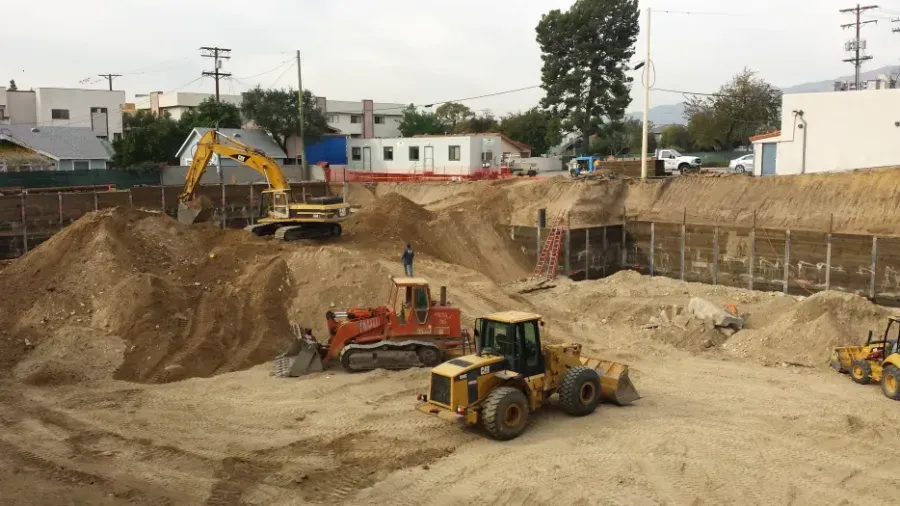
Los Angeles Grading Plans
Hillside standards, drainage requirements, cut/fill analysis. Civil engineers serving LA City, LA County, and surrounding areas.
What Is a Grading Plan
Los Angeles City requires a grading plan for hillside zones with slope exceeding 20%. LA County requires one when moving over 500 cubic yards of earth, working in hillside areas, or excavating for basements and pools. Your architect or GC typically tells you when grading is triggered based on your project scope and jurisdiction.
What We Do
- Hillside grading for LA City hillside zones
- Cut/fill analysis and calculations
- 2:1 slope design and shoring coordination
- Retaining wall location and grade setbacks
- Driveway grade design
- Basement excavation grading
- Storm drain design through curb outlet to ROW system
- County and city submittal coordination
How It Works
- 1Send us your survey and proposed site plan from your architect
- 2We design the grading with proper slope ratios and drainage patterns
- 3You get an approved grading plan ready for county or city submittal
Why LADBS Cares About Grading
Los Angeles City reviews grading plans to confirm slope stability, proper drainage away from foundations, and compliance with their hillside ordinance. A 2:1 slope means for every 2 feet horizontal, the slope drops 1 foot vertical. This is LADBS's typical maximum slope requirement before they require engineered support. Retaining walls need to show setback from property lines and be designed for soil pressure.
We work with LADBS and LA County DPW regularly. We know what they want to see in your grading submittal and how to present it in a way that gets approved the first time.
Frequently Asked Questions
Los Angeles City's hillside ordinance (Section 12.04) triggers grading plan requirements when the natural slope exceeds 20%. If your lot falls in a hillside zone, LADBS requires a full grading plan showing cuts, fills, slope ratios, and drainage before issuing a building permit.
LA County requires a grading plan when moving over 500 cubic yards of earth, working in hillside areas, or excavating for basements and pools. Los Angeles City also requires one for hillside zones with slope exceeding 20%. Your architect or GC typically tells you when grading is triggered.
A grading plan shows existing and proposed topography, cuts and fills, slope ratios (typically 2:1 or 3:1), retaining wall locations, driveway grades, and how water drains across the site. It connects to the storm drain system or shows private dispersal methods.
Once we receive your survey and proposed site plan from your architect, we typically turnaround a grading plan in 1-2 weeks. Let us know if you need it faster for your building permit timeline.
LA County requires a grading plan when earthwork exceeds 500 cubic yards. Los Angeles City uses a hillside ordinance instead, triggering grading for sites with slope exceeding 20%. Your architect or GC typically tells you when grading is required based on your jurisdiction and project scope.
A 2:1 slope means for every 2 feet horizontal, the slope drops 1 foot vertical. Los Angeles City typically requires slopes to be no steeper than 2:1. Our grading plans show the slope ratios so LADBS can confirm compliance.
Grading plans typically start at $4,800 for standard residential projects in LA County or Los Angeles City. Complex hillside sites with extensive cuts, fills, or retaining walls cost more. Get a proposal for your specific project.
For your specific Los Angeles project, talk to B+W Engineering.